
Part 5 of “Basics of Fiber, Yarn, and Fabric”
Beyond woven and knitted textiles, there are other important categories used widely in fashion, accessories, and industrial applications. This section introduces nets, lace, nonwoven/felt, and leather, explaining their structures, characteristics, and sourcing considerations.
1. Net Fabrics

Structure:
Net fabrics are made by looping, knotting, or twisting yarns to create open mesh structures.
They can be made by warp knitting (Raschel net), weaving, or braiding methods.
Features:
- Lightweight and breathable
- Varying degrees of openness and strength
- Can be elasticized or stiffened depending on yarn and finish
Applications:
- Sportswear (mesh panels)
- Lining, petticoats
- Fashion overlays and trims
Sourcing Tip:
Choose nylon or polyester Raschel nets for durability and dimensional stability.
2. Lace Fabrics

Structure:
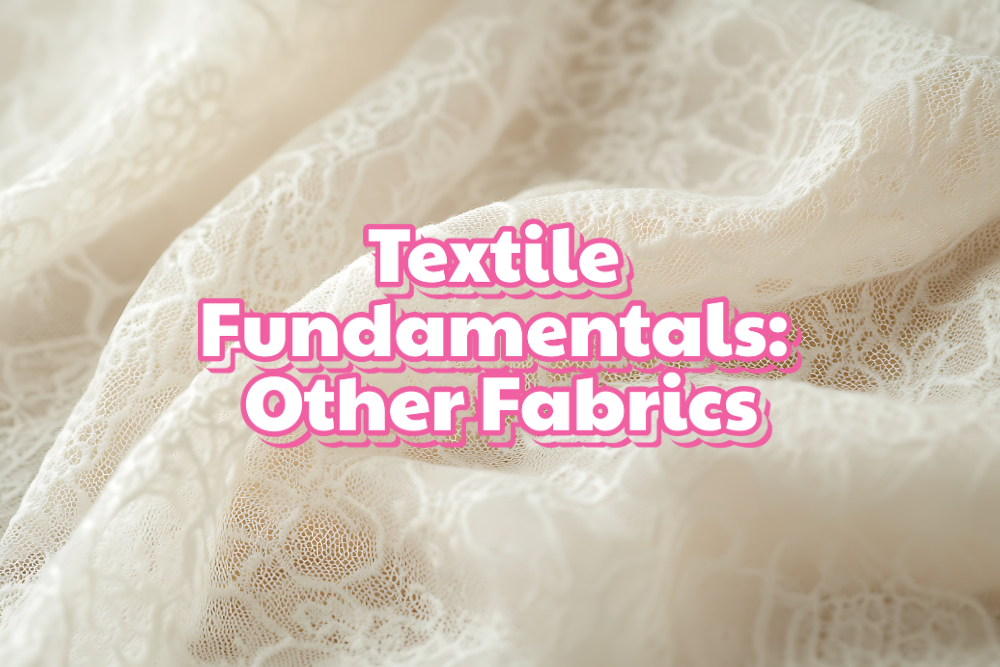
Lace is a decorative openwork fabric created by looping, twisting, or knitting yarns into intricate patterns.
Today, most lace is produced using Raschel knitting machines or Leavers machines.
Features:
- Delicate, ornamental appearance
- Often incorporates motifs, scalloped edges, or embroidery
- Can range from soft and flexible to crisp and structured
Applications:
- Lingerie, bridal wear
- Dress overlays, decorative trims
Sourcing Tip:
Modern lace blends (nylon, polyester, cotton) offer cost efficiency and consistent pattern reproduction.
3. Nonwoven Fabrics

Structure:
Nonwovens are made directly from fibers bonded together by heat, pressure, or adhesives, rather than weaving or knitting.
Types:
- Spunbond – continuous filaments bonded thermally (used for interlinings, packaging)
- Meltblown – microfibers with fine filtration (medical and hygiene use)
- Needle-punched – mechanically entangled fibers (felt-like texture)
Features:
- Low cost and high production speed
- Dimensional stability
- Limited drape and stretch compared to woven/knit fabrics
Applications:
- Interlinings, insulation (wadding/batting), filters, disposable garments
Sourcing Tip:
For apparel use, look for spunbond or needle-punched polyester nonwovens for backing, lining, or reinforcement.
4. Felt

Structure:
Felt is a nonwoven fabric made by matting and compressing fibers using heat, moisture, and pressure.
Traditionally made from wool, it’s now often blended with synthetic fibers.
Features:
- Dense and warm
- Non-fraying (can be cut without edges unraveling)
- Limited stretch and breathability
Applications:
- Hats, slippers, craft materials
- Insulation and padding in outerwear
Sourcing Tip:
Wool-rich felts have better resilience and appearance retention than purely synthetic ones.
5. Leather and Alternative Leathers

Structure:
Leather is made from animal hides that are tanned to preserve and soften them.
Modern alternatives include synthetic (PU, PVC) and plant-based leathers (apple, cactus, pineapple).
Features:
| Type | Characteristics |
|---|---|
| Genuine Leather | Durable, natural grain, ages beautifully, breathable |
| Synthetic Leather (PU/PVC) | Uniform texture, water-resistant, cost-effective |
| Plant-Based Leather | Sustainable, innovative surface feel, limited supply currently |
Applications:
- Shoes, bags, jackets, trims
- Labels and patches for denim or outerwear
Sourcing Tip:
Brands seeking sustainable options should explore bio-based leathers with verifiable origin and durability data.
Summary
| Fabric Type | Main Feature | Typical Use |
|---|---|---|
| Net | Open mesh, breathable | Sportswear, lining |
| Lace | Decorative openwork | Lingerie, dresses |
| Nonwoven | Bonded fibers, stable | Interlining, filters |
| Felt | Dense, non-fraying | Hats, insulation |
| Leather | Natural or synthetic hide | Shoes, bags, jackets / |
ApparelX is a BtoB ecommerce platform for brands, tailors and the like to order from small MOQs from a variety of manufacturers in one order. And we ship worldwide!
Check out our FAQ page, Youtube, and LinkedIn if you have basic questions or looking to stay connected.
Let ApparelX support your production needs through our apparel OEM service!
If you are looking to bulk order, custom order, or have any other questions, contact us through our contact form and a member on the Global Strategy Team will get back to you within the next business day. (Please understand that we are based in Japan and our office hours are 9am-6pm so we are only able to answer during that time).