

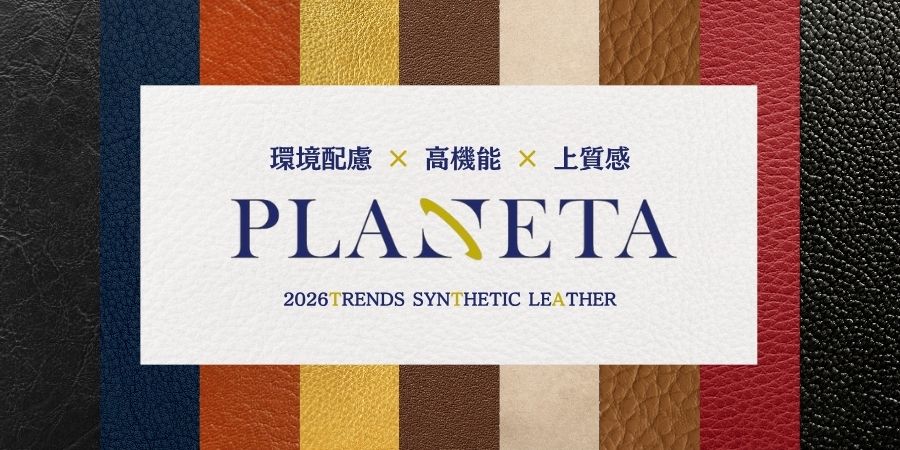
Synthetic leather—long established as a practical alternative to genuine leather—is expected to evolve even further as we move into 2026.
In addition to the traditional advantages of being lightweight, easy to handle, and highly versatile, the latest trends highlight environmental responsibility and a growing diversity in texture and surface expression.
Among these innovations, materials that incorporate plant-derived polyurethane and high-durability polycarbonate resins are gaining significant attention within the apparel and manufacturing industries.
Takashima Shoji’s popular synthetic leather series exemplifies this next generation of development.
Below, we introduce seven carefully selected items from the collection, each offering an excellent balance of texture, functionality, and application suitability for modern product development.
[ #2160 Plant-based PE Leather ]

This sustainable fabric is made with Sorona® fiber as its base, delivering both performance and environmental responsibility.
It features a supple handfeel and a soft two-way stretch, making it ideal for garments that require comfort, flexibility, and long-lasting shape retention.
Through advanced wet processing, this next-generation material offers enhanced breathability and hydrolysis resistance, allowing it to maintain its beautiful appearance over time—even with frequent wear.
For brands incorporating Sorona® into their products, official Sorona® hangtags are also available for purchase, providing a clear sustainability message to customers.
What is Sorona®?Developed by DuPont™, Sorona is an environmentally friendly, high-performance material made partially from plant-based (corn) materials. Compared to nylon 6, it reduces CO2 emissions during production by approximately 63% and energy consumption during production by approximately 30%.What is OEKO-TEX®? It isa mark of textile products that are kind to people and the earth, and is certified under the world’s highest standards, rigorously inspecting whether a production system that takes into consideration the safety of textile products as well as the environment and workers is in place.
[ #3501 Satelit ]

With its 0.9mm thickness, firm body, and subtle, elegant luster, this material delivers a beautifully luxurious finish.
Despite its substantial 420g/m² weight, it remains surprisingly flexible, striking the perfect balance between durability and usability.
The material offers excellent long-term stability and resists deterioration, making it a popular choice for outerwear, bags, small leather goods, and interior applications.
Both #2160 and #3501 are available in an extensive range of browns, with #3501 offering deeper, more saturated tones for brands seeking richer color expression.
The entire lineup is designed for ease of use, allowing smooth integration into a wide variety of products and manufacturing needs.
[ #4141 Etoile ]

Crafted with a lightweight, soft knit base, this material offers excellent resistance to fraying, making it exceptionally easy to work with. It provides generous horizontal stretch and a subtle stretch in the warp direction—ideal for smooth cutting, handling, and production efficiency.
Its versatility makes it suitable for a wide range of applications, from apparel and apparel components to outdoor goods, accessories, interior decor, and fixture materials.
A long-selling favorite, this series features a refined, matte-leaning sheen, understated patterning, and a rich selection of colors. With its reliable quality and broad usability, it’s a go-to choice for many manufacturers—and an excellent option for anyone working with synthetic leather for the first time.
[ #4181 Volume Leather ]

With a natural cowhide-like grain and a substantial 1mm thickness, this material delivers the dimensional presence and visual impact of genuine leather. Its structure makes it particularly well-suited for three-dimensional applications, including jackets, blousons, and other items that require shape and durability.
Enhanced resistance to aging allows it to perform reliably across a wide range of end uses—from apparel and accessories to bags, footwear, and even industrial materials.
Engineered with high hydrolysis resistance, it also demonstrated outstanding stability in the jungle test (※). After six weeks, no surface film peeling was observed—equivalent to approximately six years of real-world use. This level of durability makes it an excellent choice for brands looking for long-lasting, high-performance synthetic leather.
What is the Jungle Test?
This test recreates the deterioration that would normally take a year in an artificially created high temperature and humidity environment in about a week, and measures the peel strength every week to assess durability against deterioration over time.
[ #4345 Stretch ]

The standout characteristic of this material is its true 2-way stretch, offering flexibility both vertically and horizontally. With polyurethane integrated into the base fabric, it delivers a tightly woven structure and excellent kickback, ensuring reliable recovery and long-term shape retention.
The surface is clean and modern, featuring a flat, smooth finish with no embossed grain—ideal for applications that require a sleek, minimal look.
Color #101 is a pure, crisp white.
Please note that the off-white #1 has been discontinued, and at this time, there are no comparable flat, matte off-white alternatives available in the lineup.
[ #4340 Stretch ]

This material features an enamel-like, high-gloss surface with a smooth, refined finish. It is the glossy counterpart to #4345 Stretch, offering the same blend ratio, fabric density, and excellent kickback performance.
While the gloss finish can make fingerprints more noticeable, it excels in applications where a striking, glamorous look is desired—particularly for stage costumes, performance wear, and statement pieces.
- Color #1: An off-white with a soft yellow undertone.
- #71 Silver & #72 Gold: Elegant pearlescent shades with a subtle grainy texture.
- #78 Bronze: A light-reflective, muted metallic that shifts between gray and brown depending on the angle.
This lineup is perfect for designers seeking eye-catching shine with reliable stretch performance.
[ #81501 Bio Leather ]

This dry-touch synthetic leather is designed to mimic the refined look of calfskin, offering a distinctive wrinkled, textured appearance created through a blend of polyester/cotton lining and specialized bio-processing.
During finishing, the material is washed in an enzyme-based solution that selectively reacts with the cotton component. This reduces the cotton content to achieve a soft, relaxed, almost broken-in feel—a texture that sets it apart from standard synthetic leathers.
With comfortable horizontal stretch, it works well across a wide range of applications, including outerwear, jackets, pants, and apparel accessories.
Color #1 (Off-White): A calm, understated tone that leans toward beige-ivory, offering a versatile neutral option for modern designs.
This material is ideal for brands seeking a leather alternative with both character and flexibility.
How to Keep Synthetic Leather Beautiful and Long-Lasting
Synthetic leather has become a widely used material in apparel, accessories, interiors, and more—thanks to its realistic leather-like appearance, stable quality, and ease of handling. Unlike genuine leather, synthetic leather maintains consistent softness and hardness regardless of temperature (though PVC-based leather can change slightly), making it more predictable for production.
All seven items featured here are polyurethane-based synthetic leather, known for their strength, durability, and resistance to long-term deterioration. However, because synthetic leather is made from chemical components, it will naturally degrade when exposed to moisture, UV rays, and heat. Proper handling—from storage to cutting, sewing, and finishing—is essential to extend the life of the material and final product.
Below is a detailed guide to understanding synthetic leather characteristics and best practices for long-term performance.
Characteristics of Synthetic Leather
Synthetic leather is prone to hydrolysis, which can cause peeling or stickiness over time. While completely preventing this chemical reaction is impossible, polycarbonate-based polyurethane offers significantly improved durability. When handled correctly, peeling and stickiness can be delayed for many years.
A few additional considerations:
Avoid Harsh Chemicals: Solvents may damage the coating.
Color Transfer: Dark colors layered against light colors may cause staining.
Cleaning: Use a mild detergent, wipe with a tightly wrung damp cloth, then dry thoroughly.
How to Store Raw Rolls of Synthetic Leather
Proper storage plays a major role in preventing premature deterioration.
Storage Rules
- Store the material rolled on a core, never folded.
- Avoid heat, humidity, and direct sunlight.
- Do not stack rolls or store them upright, which can cause deformation.
- Before cutting, relax the fabric for 24 hours by laying it flat.
- Spread and mold the material in the same direction to prevent distortion or shrinkage after cutting.
Key Points for Cutting Synthetic Leather
Because synthetic leather shows damage easily, careful cutting is essential:
- Remove any scratches beforehand—repairs are very difficult.
- Use a low-speed cutting machine to avoid heat buildup that can melt or fuse resin.
- Avoid oil-based markers or ballpoint pens; ink may bleed or damage the coating.
- Keep same-color / same-lot materials separate and store them without folding.
Sewing Tips for Synthetic Leather
You can sew synthetic leather with a standard industrial machine, but note the following:
General Guidelines
- Always sew within the same roll to avoid differences in color or texture.
- Warp and weft stretch may differ—handle carefully when combining directions.
- Use Teflon or resin-coated presser feet, needle plates, and feed dogs to prevent scratching.
- Reduce presser foot pressure slightly and use minimal backstitching.
- Reinforce high-stress points (pocket corners, edges) to prevent peeling or tearing.
- Recommended stitch density: 11–13 stitches per 3 cm, depending on thickness.
Needles
- Once the needle pierces the material, holes remain—avoid re-stitching.
- Use fine, sharp needles and replace them often.
- For knit-backed synthetic leather, use S, KN, SF needles or surface-treated types such as SU, ASU, PSU.
Ironing and Pressing
- Do not use steam.
- Iron on the reverse side at 110°C or lower with a pressing cloth.
- A textured nonwoven sheet helps prevent the surface embossing from flattening.
- Use low-temperature fusible interlining and test beforehand.
How to Store Finished Products
To keep the final garment or accessory in good condition:
- Protect from light, moisture, and heat—use a dehumidifier when possible.
- Store hanging, not folded.
- Place wrapping paper against the coated surface to avoid sticking or color transfer.
- Do not let coated surfaces touch each other.
Packaging Notes
When packaging synthetic leather:
- Use polypropylene (PP) or polyethylene (PE) bags.
- Never use PVC packaging, as it may cause a chemical reaction with the material.
Summary
Synthetic leather is far easier to handle than genuine leather, but it still has an unavoidable tendency to deteriorate through hydrolysis. With proper storage, careful cutting, correct sewing techniques, and thoughtful finishing, you can dramatically extend the lifespan of both the material and the finished product.
High-quality polycarbonate-based polyurethane synthetic leather is especially durable, making it suitable for long-term use in fashion, interiors, bags, footwear, and industrial applications.
Looking Ahead: Synthetic Leather in 2026
In 2026, synthetic leather is entering a new stage—combining environmental responsibility, high functionality, and premium aesthetics. With more plant-derived polyurethane options, improved durability, and increasingly refined textures, synthetic leather now offers the beauty of real leather with added freedom, creativity, and modern performance.
Click here for a list of PLANETA® products .
PLANETA® is an original brand and registered trademark of Takashima Shoji Co., Ltd., an Osaka-based company specializing in synthetic leather and eco-fur.
Takashima Shoji Co., Ltd. has been specializing in synthetic leather for over 30 years, and has been utilizing this expertise to plan and sell high-quality products.